Mathematics has been one of the oldest and most important fields of science in the history of mankind. Throughout centuries, numerous scientists have played a significant role in the development of this field. Although male mathematicians are more frequently mentioned in history, female scientists have also made great contributions to the development of mathematics, astronomy, physics, and computer science.
AzEdu.az has researched the most famous women mathematicians who left their mark in history:
1. Hypatia - the first woman mathematician (370 – 415)

Hypatia of Alexandria is considered the most renowned woman mathematician, astronomer, and philosopher of the ancient world. She was born around 370 AD in Alexandria, Egypt. Alexandria was one of the most important centers of science and culture at that time, housing the famous scientific school and library complex called “Mouseion” (Museion). Hypatia grew up and developed in this rich scientific environment.
Her father, Theon, was one of Alexandria's prominent mathematicians and astronomers. Theon was involved in both scientific activities and teaching. He was one of the important scholars who worked on the preservation and explanation of Euclid's “Elements.” Hypatia received her initial education from her father and became familiar with mathematics, astronomy, and philosophy from an early age.
However, Hypatia did not remain merely her father's student. Over time, she became an independent scholar and a powerful teacher known by her own name. She led a philosophical school in Alexandria, giving high-level lectures, and was recognized as one of the most educated people of her time.
Hypatia's scientific activity was mainly based on the interpretation and development of ancient Greek mathematics. She is credited with writing commentaries on Diophantus's “Arithmetica” and explaining Apollonius's “Conics.” In addition, she did important work in astronomy and helped edit and clarify various astronomical texts.
Hypatia was interested not only in theoretical science but also in practical scientific instruments. She is noted for her role in the development of the astrolabe (a device for measuring the positions of celestial bodies) and for contributing to the improvement of devices that measure liquid density, such as the hydrometer. This demonstrates her proficiency in both theoretical and applied science.
She was also a very powerful teacher. Students came from various regions to her classes, and Hypatia not only transmitted knowledge but also taught skills in thinking, analyzing, and philosophical approaches. For this reason, she was regarded not only as a scholar but also as an intellectual leader.
However, Hypatia's life ended tragically due to the political and religious tensions of her era. In Alexandria, during Roman rule, a serious power struggle arose between the civil leader Orestes and the religious leader Bishop Cyril. This conflict gradually intensified, and political stability in the city was disrupted.
During these tensions, various rumors spread about Hypatia. It was alleged that she supported Orestes, thereby disrupting political reconciliation. As a result, she was attacked by a fanatical group and brutally murdered in 415 AD.
Her death is considered not only the tragedy of a scholar but also a symbol of the conflict between science and fanaticism, rational thought and ignorance. Nevertheless, Hypatia left her mark in history not only through her death but also through her life and scientific activities.
Today, Hypatia is remembered as one of the greatest women scientists of the ancient world and as a symbol of free thought and scientific inquiry. She proved that women can play a significant role in the development of science, even in the most challenging historical circumstances.
2. Sofya Kovalevskaya (1850 – 1891)

Sofya Vasilyevna Kovalevskaya was one of the most important female scientists who made a name for herself in mathematics during the 19th century, a period when women's access to science was very limited. She was born in Moscow in 1850 and showed great interest in mathematics from childhood.
At that time, women were forbidden from being admitted to universities in Russia, and for this reason, Kovalevskaya could not receive formal education. Nevertheless, she took lessons from private tutors and developed her mathematical knowledge. From an early age, she demonstrated serious mathematical ability and attracted attention with this skill.
Later, to continue her studies, she decided to go to Europe and left Russia in 1869 after a formal marriage. She went to Germany and attended some classes as an auditor at Heidelberg University, but was not accepted as an official student because she was a woman.
Then she went to Berlin and met the famous mathematician Karl Weierstrass. Since the university was closed to women, she could not study officially, but Weierstrass saw her talent and gave her private lessons. Kovalevskaya progressed very quickly in these lessons and gained high-level mathematical knowledge.
In 1874, she received her doctorate in mathematics from Göttingen University. Her dissertation was on partial differential equations, where she proved an important result later known as the “Cauchy–Kovalevskaya theorem.” This result explained the existence and uniqueness of solutions to equations in mathematics.
Despite receiving her doctorate, she could not immediately find an academic position because women were not given positions in universities. Therefore, she continued her scientific activities unofficially for some time.
Later, she went to Sweden and started working at Stockholm University. There, she did serious scientific work in mathematics and was promoted to full professor in 1889. This made her one of the rare women mathematicians to become a professor in Europe.
She also conducted research on the motion of rigid bodies and achieved important results in this field. In 1888, she won the Prix Bordin from the Paris Academy of Sciences, and this success led to her international recognition. In addition to her scientific work, Kovalevskaya also wrote, expressed her views on science and society, and put forward ideas about women's entry into science.
Unfortunately, she passed away in Sweden in 1891 at the age of 41. She lived a short life but left a very significant mark in the history of mathematics. Today, Kovalevskaya is regarded as one of the strongest symbols of women's ability to achieve great success despite the obstacles they face in science, and her name holds a special place in the history of mathematics.
3. Emmy Amalie Noether (1882 – 1935)
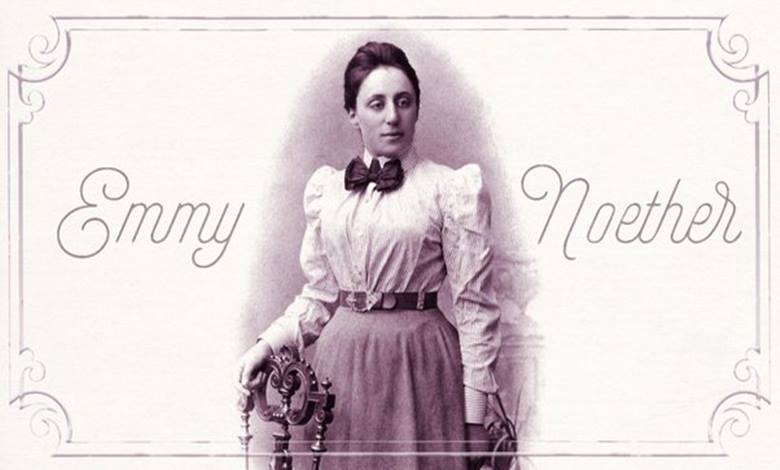
Emmy Noether made immense contributions not only to mathematics but also to the development of physics. She linked the concept of symmetry with the conservation laws of energy, momentum, and other physical quantities, thereby creating a revolutionary change in the history of science. Her Noether's theorem is considered one of the most important results of modern theoretical physics. This theorem showed that every symmetry existing in nature corresponds to a specific conservation law. For example, the invariance of time is linked to the conservation of energy, and the invariance of space is linked to the conservation of momentum. For this reason, Noether's theorem is regarded as one of the most beautiful and fundamental theorems in physics.
Emmy Noether made significant contributions to both pure and applied mathematics. She worked particularly on abstract algebra, rings, ideals, and algebraic structures. Her research greatly influenced the development of modern algebra and is still studied in leading universities worldwide today.
However, Noether's scientific path was not easy. Because she was a woman, she was not accepted as an official student at the university and was not allowed to work as a teacher for a long time. Universities needed the support of renowned mathematicians of the time to take her work seriously. Famous scientists David Hilbert and Felix Klein highly valued her talent and defended her before the university administration. Nevertheless, Noether taught without salary for a long time and was only awarded the title of professor years later.
Despite all the discrimination she faced, Emmy Noether did not stop her scientific activities. She continued to conduct research, train students, and develop new mathematical theories. Her perseverance and love for science became an example for subsequent generations of women scientists.
Emmy Noether passed away in 1935. After her death, world-renowned physicist Albert Einstein wrote in a letter to The New York Times about her: "Emmy Noether was the most significant creative mathematical genius thus far produced since the higher education of women began." These words once again demonstrated the magnitude of her contributions to science.
4. Sophie Germain (1776–1831)

Sophie Germain was one of the most prominent women mathematicians who lived in the 18th and 19th centuries. She lived in an era when women were hardly accepted in the field of science, and despite all difficulties, she earned a unique place in the history of mathematics. Her life is considered one of the finest examples of endless interest in science, perseverance, and willpower.
Sophie Germain was born in Paris, France, in 1776, into a wealthy family. She spent her childhood during the French Revolution. Due to the revolution, she could not leave her home for a long time and spent most of her time in her father's rich library. Here, she read books on mathematics, philosophy, and science. In particular, the story she read about the death of the ancient Greek scholar Archimedes sparked a great interest in mathematics in her. After learning that Archimedes was so dedicated to his scientific work that he was thinking about mathematical problems even at the moment of his death, Sophie also decided to dedicate her life to science.
To learn mathematics more deeply, she did not limit herself to books in French only. She learned Latin and Greek to be able to read the works of great mathematicians like Newton, Euler, and Lagrange in their original languages. This showed how seriously she approached science.
However, her family initially did not support her interest in mathematics. Her parents even took away the candles and heating devices from her room to prevent her from working at night. Nevertheless, Sophie Germain did not give up mathematics. She continued to work in secret and increased her knowledge despite the difficulties.
At that time, École Polytechnique, one of France's most prestigious higher education institutions, did not admit female students. Therefore, Sophie Germain could not receive formal education at the university. However, she obtained the university's lecture notes and studied independently based on those materials. This allowed her to gain a high level of mathematical knowledge.
Sophie Germain used the male pseudonym "Monsieur LeBlanc" to send her scientific works to the famous mathematician of the time, Joseph-Louis Lagrange. She concealed her gender because, at that time, the opinions of female scientists were not taken seriously. Lagrange read her submitted works, recognized her high mathematical talent, and continued his support even after learning her true identity.
Later, Sophie Germain corresponded with other great mathematicians of her time, Adrien-Marie Legendre and Carl Friedrich Gauss. Gauss, in particular, highly valued her scientific ability and showed her great respect in his letters. Gauss considered Germain's achievements extraordinary despite her being a woman.
One of Sophie Germain's most important scientific researches was related to Fermat's Last Theorem. She worked on this famous problem for many years and achieved significant results. Her research led to the concepts later named Sophie Germain's theorem and Sophie Germain primes. These results played an important role in the development of number theory and are still used in mathematics today.
She did not limit herself to theoretical mathematics but also conducted research in physics and mechanics. In particular, she worked on the vibrations of elastic surfaces and metal plates. These studies were of great importance in the fields of engineering and architecture. Her theories were later applied in calculating the strength of bridges, buildings, and other structures.
In 1816, the Paris Academy of Sciences highly praised her research on the vibration of elastic surfaces, and Sophie Germain became the first woman scientist to win an award from this academy. This success led to the international recognition of her scientific work.
Despite all these achievements, Sophie Germain could not obtain an official position at any university. The discrimination against female scientists prevalent in her time hindered her academic career. Even when she passed away in 1831, her profession was not recorded as "mathematician" in official documents, but simply as "unmarried woman." This fact clearly showed how female scientists were valued at that time.
Nevertheless, Sophie Germain's scientific legacy has been increasingly appreciated over time. Her name is mentioned with special respect today in number theory, elasticity theory, and the history of mathematics. Her love for science, perseverance, and unwavering commitment to her goals despite all obstacles have made her an inspiration for subsequent generations of women scientists. Her life once again proved that true talent and dedication to science cannot be limited by any social barriers.
5. Maria Gaetana Agnesi (1718–1799)
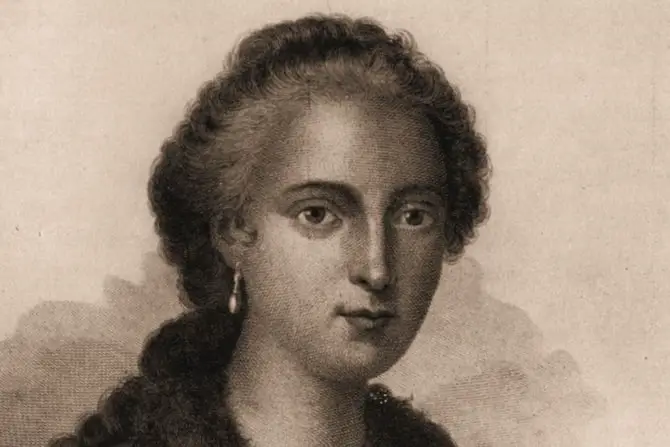
Maria Gaetana Agnesi was a prominent Italian mathematician, philosopher, and linguist who lived in the 18th century. She achieved significant success in mathematics during a period when women were little recognized in the field of science, and with her scientific activities, she proved that women could also be high-level scholars. Agnesi is known in the history of mathematics as one of the first female authors and one of the first female professors.
Maria Gaetana Agnesi was born in Milan, Italy, in 1718, into a wealthy, educated, and influential family. Her father, Pietro Agnesi, was a well-known merchant and often invited scholars to his home. Therefore, Maria grew up in a rich intellectual environment, interacting with scholars and philosophers from childhood.
From a very young age, she amazed everyone with her extraordinary memory and learning ability. At just five years old, she spoke Italian and French fluently. By the age of twelve, she had also learned Greek, Latin, Hebrew, German, and Spanish. Her great interest in languages later played an important role in her scientific activities. She was able to read and compare mathematical works written in various languages from original sources.
When Agnesi was nine years old, she translated a text about women's right to education into Latin. Later, she recited that text by heart at a scientific meeting organized at her father's house. This presentation demonstrated her high intellect and attracted the attention of scholars.
In her youth, she was also interested in philosophy, logic, and theology. However, over time, she focused more on mathematics. She deeply studied algebra, geometry, and analysis, and researched mathematical works written in various European countries.
Agnesi made her greatest contribution to mathematics with her two-volume book titled "Analytical Institutions" ("Instituzioni Analitiche"), published in 1748. This work was considered one of the most perfect mathematics textbooks of its time. The book systematically and simply explained algebra, analytical geometry, differential calculus, and integral calculus. It brought together mathematical theories that had emerged in various countries until then and presented them in a unified textbook format.
One of the most important features of this book was its comparison of mathematical ideas written in different languages and the creation of a unified system. Agnesi's strong language skills allowed her to read the works of various European mathematics schools and combine their superior aspects into one book. For this reason, her book was used as a primary textbook in various European universities for many years.
After its publication, the book was met with great interest and highly praised by prominent mathematicians of the time. The distinguished French mathematician Joseph-Louis Lagrange also used this work in his research and highly valued its scientific merit.
One of the most famous concepts associated with Maria Gaetana Agnesi is the mathematical curve called the "Agnesi curve" (Witch of Agnesi). Interestingly, this name actually arose from a translation error. The Italian word "versiera" was misunderstood and translated into English as "witch." However, Agnesi herself described this curve simply as a mathematical object. Nevertheless, this name has been preserved in the history of mathematics, and the curve is still known by her name today.
In later years, Agnesi gradually withdrew from scientific activity. She dedicated her life more to charity work and helping the poor. She spent a large part of her financial resources on people in need and cared for the sick and elderly. In her final years, she even participated in the management of a poorhouse.
She passed away in Milan in 1799. Her scientific work throughout her life was even more highly valued in later periods. Today, Maria Gaetana Agnesi is remembered not only as one of the greatest women mathematicians of the 18th century but also as a scholar who made significant contributions to the systematic teaching of mathematics. Her works influenced the development of European mathematics and became a valuable resource for subsequent generations of scholars.
6. Maryam Mirzakhani (1977–2017)

Maryam Mirzakhani was one of the most prominent mathematicians of modern times. She inscribed her name not only in the history of mathematics in Iran but also worldwide, inspiring millions of young people with her achievements. Mirzakhani is particularly known for her research in geometry, topology, and dynamic systems. Her scientific achievements have greatly contributed to the development of modern mathematics.
Maryam Mirzakhani was born on May 12, 1977, in Tehran, the capital of Iran. In her childhood, she dreamed of becoming a writer. However, during her school years, she began to show interest in mathematics, and it quickly became clear that she possessed an extraordinary talent in this field. Her teachers highly appreciated her analytical thinking ability and provided opportunities for her to participate in various mathematics competitions.
Mirzakhani participated in the International Mathematical Olympiad during her school years. In the 1994 Olympiad, she won a gold medal. A year later, she participated again and earned her second gold medal with a perfect score, answering all questions correctly. With this, she became the first female student in Iranian history to win a gold medal at the International Mathematical Olympiad.
She received her higher education at Sharif University of Technology in Tehran. Later, she went to the United States to continue her education and pursued doctoral studies at Harvard University. Here, she conducted scientific research under the supervision of the famous mathematician Curtis McMullen and quickly attracted the attention of the international scientific community.
After completing her doctoral studies, she worked at various universities. Later, she was appointed as a professor at Stanford University in California. She was one of the first female mathematics professors to work at Stanford University and successfully continued her scientific activities there.
Mirzakhani's main research areas were Riemann surfaces, hyperbolic geometry, moduli spaces, and dynamic systems. She investigated the structure and laws of motion of curved surfaces – spheres, tori (surfaces resembling a ring or donut shape), and more complex geometric figures. Her research helped explain how these complex geometric objects change and behave under different conditions.
Although these studies were primarily theoretical, their results were also applied in physics, quantum mechanics, cosmology, and other fields of science. In particular, Mirzakhani's results were used in studying the geometric structure of the universe and explaining some problems of quantum theory.
Since there is no Nobel Prize in mathematics, one of the most prestigious awards in this field of science is considered the Fields Medal. This award is presented every four years to scholars under the age of 40 who have made significant contributions to mathematics. In 2014, Maryam Mirzakhani was awarded this prize and made history as the first woman, and also the first Iranian scholar, to win the Fields Medal.
She received this award for her important research in the geometry and dynamics of Riemann surfaces and their moduli spaces. The results she achieved opened new directions in solving the most complex problems of modern mathematics and were highly praised by leading mathematicians worldwide.
Mirzakhani used a different method when solving mathematical problems. She first depicted complex formulas as various shapes and sketches on paper, and then found solutions by thinking about these visual representations. This creative approach was one of the most characteristic features of her scientific activity.
Unfortunately, in 2013, she was diagnosed with breast cancer. She fought the disease for several years but passed away in 2017, at just 40 years old. Her untimely death was considered a great loss for world science, and many scholars stated that she could have achieved even greater accomplishments in the future.
7. Ada Lovelace (1815–1852)

Ada Lovelace was one of the scientists who laid the foundation of modern computer science. She is known as the first computer programmer in history and was one of the first to understand how important a role computers could play in people's lives in the future. The ideas she put forward were extremely advanced for her time and later played a significant role in the development of computer technologies.
Ada Lovelace was born on December 10, 1815, in London, England. Her father was the famous romantic poet of the time, George Gordon Byron (Lord Byron), and her mother was Annabella Milbanke. Her parents separated when Ada was very young, and her upbringing primarily fell to her mother. Her mother did not want her daughter to be interested only in literature like her father, and therefore paid special attention to her education in mathematics and logic.
From childhood, Ada showed great interest in mathematics, mechanics, and scientific innovations. She took lessons from renowned scholars of her time and quickly acquired high-level mathematical knowledge. From a young age, she distinguished herself with her ability to solve complex mathematical problems.
In 1833, at about 17 years old, she met the famous English mathematician and inventor Charles Babbage. This acquaintance became a significant turning point in her life. Babbage was working on a mechanical calculating device called the Difference Engine (Difference Engine), which could perform calculations automatically. Later, he further developed this project and began to design a more complex computing system called the Analytical Engine (Analytical Engine). This device is considered the first model of modern computers.
In 1842, the Italian engineer Luigi Menabrea wrote an article about the Analytical Engine. Charles Babbage asked Ada Lovelace to translate this article into English. Ada did not merely translate the article. She also added her own notes to the text, and these notes were approximately three times longer than the original article. In 1843, these notes were published along with the article and were later considered one of the most important documents in computer science.
In her notes, Ada Lovelace explained step-by-step how Bernoulli numbers could be calculated using the Analytical Engine. For this, she developed a special algorithm. This algorithm is considered the first computer program in history intended to be executed by a machine. Therefore, Ada Lovelace is known as the first programmer in world history.
However, her greatest achievement was not just writing the first program. Ada Lovelace predicted in advance that computers would not only perform mathematical calculations in the future. She stated that such machines could compose music, process texts, work with images, and analyze various data. Although these ideas, put forward in the 19th century, seemed incredible at the time, they form the basis of the functions performed by modern computers today.
Ada Lovelace believed that a computer could not think like a human but could accurately execute the instructions given to it. This idea later became one of the important theoretical foundations in the development of programming languages and computer algorithms.
Unfortunately, Ada Lovelace did not live a long life. She passed away in 1852, at just 36 years old, due to childhood illnesses and severe health problems. After her death, her scientific work was not adequately appreciated for many years. However, as computer technologies rapidly developed in the 20th century, scientists realized how far-sighted her ideas were.
Today, Ada Lovelace is considered one of the founders of computer programming. The Ada programming language developed by the US Department of Defense is named in her honor. Every year in October, "Ada Lovelace Day" is celebrated in various countries around the world, and this day is dedicated to the achievements of women working in science, technology, engineering, and mathematics.