The successes of Azerbaijani scientists engaged in scientific activities abroad are of great importance in terms of promoting our country's scientific potential at an international level. Especially in the field of medicine, the development of new surgical methods, the application of digital technologies, and the training of young scientists are among the main directions of modern science.
Azerbaijani scientist Elchin Badaloglu, who is engaged in scientific and pedagogical activities in Turkey, conducting research in the field of oral, dental, and maxillofacial surgery, as well as implantology, is one of the scientists on this list. He is the patent author of two surgical inventions (techniques) bearing his surname.
Currently, as an associate professor at Istanbul Aydın University, he continues his scientific and pedagogical activities in Istanbul, Turkey, is a scientific supervisor for doctoral students, and strives to contribute to the expansion of Azerbaijan-Turkey scientific cooperation.
AzEdu.az spoke with Elchin Badaloglu on this occasion.
In our interview, we discussed the differences between Turkish and Azerbaijani medical education, the importance of theoretical knowledge and clinical experience in dentistry, the creation of new surgical methods, the impact of artificial intelligence on medicine, and his recommendations for young people who want to build a scientific career abroad.
We present the interview:
-During your studies at Azerbaijan Medical University, you went to Turkey through a student exchange program. At that time, did you think this decision would have such a serious impact on your future life and scientific career?
-Actually, I did. Because before that, I had studied biology in Turkey for a year. However, later I had to return to Azerbaijan due to family problems.
Later, when the opportunity to participate in the student exchange program arose, I understood that it was a very important opportunity for me. Nevertheless, the competition during the selection phase was very high, and frankly, I didn't believe I would be selected. Although I thought the probability was low, I didn't rule out this possibility.
As a result, 29 out of approximately 280 excellent students were selected. Three students were selected from the Faculty of Dentistry, and I was one of them. Thus, I can say that I started my career at Istanbul University.
-As you mentioned earlier, you were one of the 29 students selected from among 280 excellent students. Which factors do you think played a role in your success in this selection?
-I believe that this success did not only come from my studies. Of course, excellent students participated in the selection. However, I think that the upbringing and education I received at home also played a big role. Very little time was allocated for the selection. Representatives of the faculty of Istanbul University and Azerbaijan Medical University participated in the commission. I remember there were about 20 judges, and each of them asked us questions.
Although some questions were related to our scientific knowledge, the main goal was to evaluate the students' worldview, their vision for the future, how they developed themselves, and their potential. Attention was also paid to whether we had the ability to represent Azerbaijan abroad appropriately.
We had about 10-15 minutes to express ourselves well. The first 5-10 minutes were especially important. The interview with some students lasted about five minutes, while with others it was 15 minutes. My interview, as I recall, lasted 15-20 minutes. Overall, during the evaluation, importance was given not only to the knowledge we gained from textbooks but also to our outlook on life and our general perspective.
-Was the opportunity to study in Turkey just an academic opportunity for you, or a turning point that determined your future career?
-I thought it could be a turning point for my future career. Because I had enough information about Turkey and the university where I would study. Istanbul University is a higher education institution known for its ancient history and international recognition. The university also has important traditions in the field of medicine. For example, the first faculty of dentistry in Turkey was established at Istanbul University in 1908. Dentists' Day in Turkey is also associated with the establishment of that faculty.
I knew this history and understood that I would be studying at the faculty where the foundation of dentistry education in Turkey was laid. I believed that by taking lessons from high-level teachers there, I would successfully start my career. This belief was not accidental; it was based on my goals. I think the result was as I expected.
-When transitioning from Azerbaijan Medical University to Istanbul University, what difficulties did you encounter in terms of adapting to the teaching environment, education system, and new life?
-Before that, I had some information because I had studied biology in Turkey for a year and was proficient in Turkish. Despite this, I experienced difficulties. It would not be true if I said otherwise. Azerbaijan Medical University is a higher education institution that provides a sufficiently good education. However, the curriculum and the approach of the teachers at Istanbul University were different. In Azerbaijan, education was more based on the deep assimilation of theoretical knowledge, in accordance with the traditions coming from the former Soviet education system. In Istanbul University, more emphasis was placed on practice.
We three students came to Istanbul University together. Here, fundamental subjects such as anatomy, physiology, pathology, and histology were taught. At Azerbaijan Medical University, we had mastered these subjects so deeply within a year that even when we attended classes at Istanbul University, we showed high results in both theoretical and practical sessions without much additional effort. The teachers were also interested in how we acquired this knowledge.
This showed how strong the foundation was laid in our previous university. That knowledge was very useful in our future careers. Along with this, there were significant differences in teaching approaches. At Istanbul University, communication between students and teachers was more open. Students expressed their opinions freely, asked questions to teachers, sometimes criticized their opinions, or stated that they disagreed with the approaches put forward.
In our country, traditionally, the teacher spoke, and the students listened. We often had difficulty asking our questions or objecting to the teacher's opinion. At Istanbul University, I saw the exact opposite. It took me about a year to adapt to this different environment. After a year, I had already gotten used to the new teaching system and form of communication.
-You have experience in medical education in both Azerbaijan and Turkey. What are the main differences you can highlight when comparing the medical education systems of these two countries?
-Actually, the medical education systems of both countries have common features. However, during the period when we came to Turkey, especially in the years before 2000, Azerbaijani medicine developed more under the influence of the Russian medical school.
I think that about 50 years ago, Russia had a very good medical education system. However, after the collapse of the Soviet Union, the development of education there weakened to some extent, and this affected Azerbaijan, as well as other post-Soviet countries. During this period, Turkey's medical education system began to come to the forefront. This was because students who had gone to the USA for education at one time returned to Turkey and contributed to the development of medical education here. I also clearly felt certain differences between Turkey and Azerbaijan during that period.
Later, medical students who went abroad from Azerbaijan to study returned to the country and began to apply the experience they gained. I think that today there is not as big a difference between the medical education of the two countries as before. Of course, Turkey may be ahead in some sense, but I don't think there are sharp differences. Nevertheless, when we came to Turkey, that difference was more clearly felt.
-In your opinion, how should the right balance between theoretical knowledge and clinical experience be established in medical education? In this regard, which examples from Turkey's experience could also be beneficial for Azerbaijan?
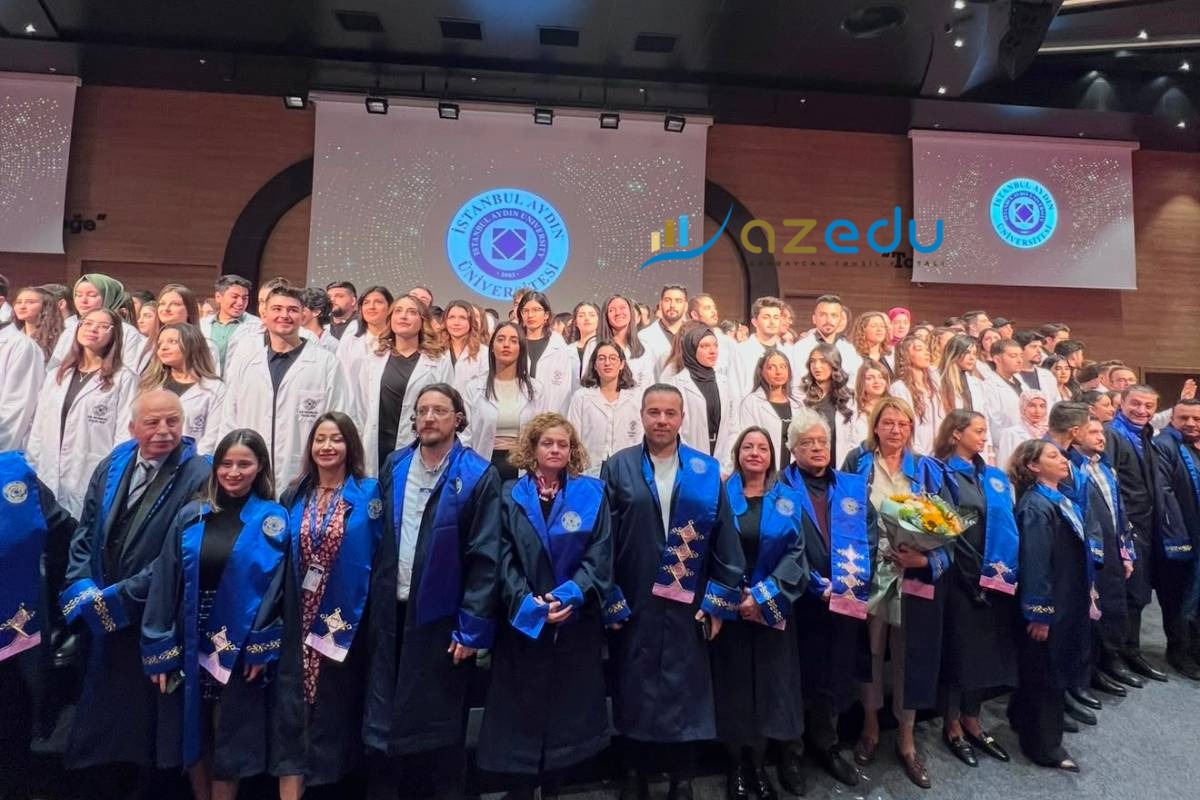
-I think that medical education can be compared to a bird with two wings. If one of the bird's wings is strong and the other is weak, it cannot fly normally. Medical education is also like this. Here, both theoretical knowledge must be strong, and practical skills must be given enough space. These are complementary factors, and it is impossible to imagine one separately from the other.
In Turkey, especially in the field of dentistry, I think this system is quite well established. From the third year onwards, students acquire theoretical knowledge within a defined system and also gain practical experience by examining and treating patients. Their practical activities are evaluated, and based on the results they collect, it is determined whether they will be allowed to take exams.
In my opinion, one of the main advantages of dentistry education is that students examine and treat patients under the supervision of teachers without receiving a diploma, and they carry out this process in accordance with the legislation. Students first apply their theoretical knowledge in practice. Those who cannot achieve the required result in practical exams are not even allowed to take theoretical exams.
At Azerbaijan Medical University, students also work with patients and examine them. However, I think that this experience is still not broad enough for the professional training of students. We have stronger theoretical knowledge, but students sometimes graduate with experience on a limited number of patients.
In Turkey, for example, a student who completes the fifth year of the faculty of dentistry performs the basic treatment procedures sufficiently and develops their practical skills. I think the main difference between the medical education of the two countries is precisely here: not only the student's acquisition of theoretical knowledge but also the extent to which they can apply that knowledge in practice is of great importance.
-One of the main directions of your scientific activity is oral, dental, and maxillofacial surgery. Which scientific problems in this field concern you the most?
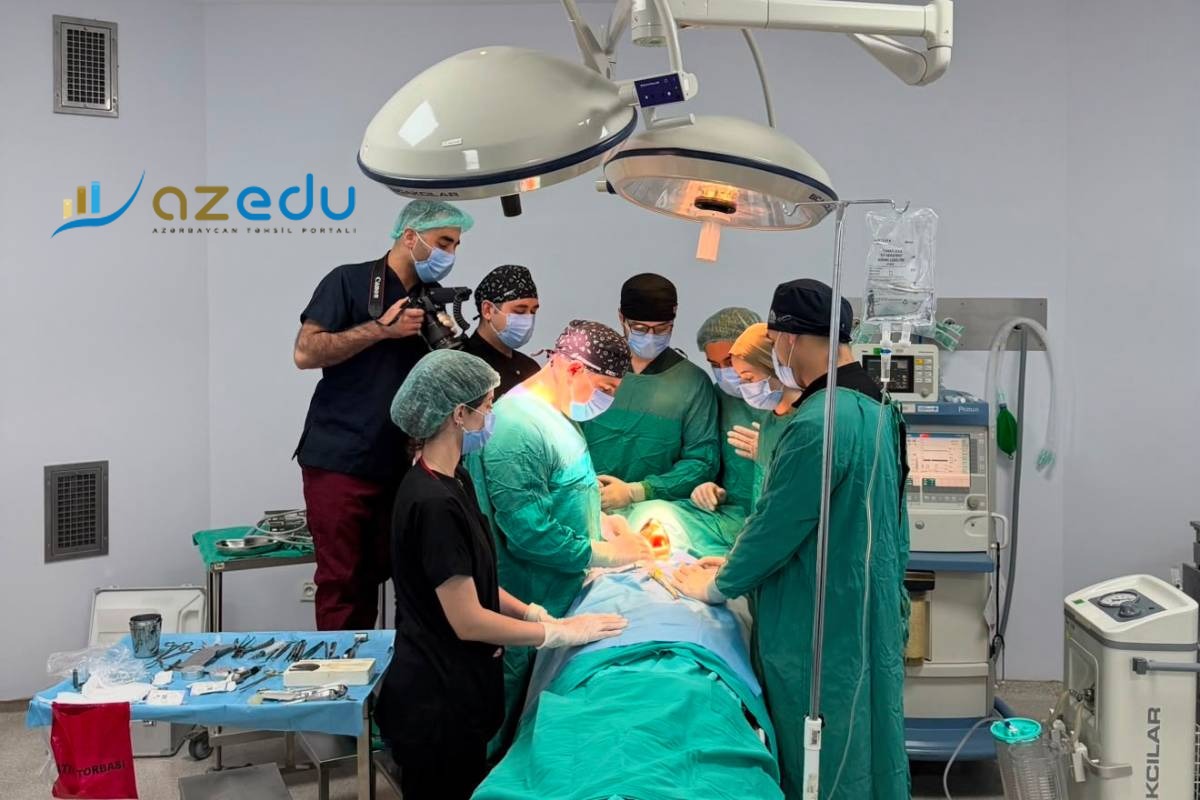
-Oral, dental, and maxillofacial surgery is a very broad field and covers various directions. Among these directions, the field I am most interested in is implantology. I especially deal with the reconstruction of jawbones, that is, methods of increasing bone tissue. We call this process augmentation.
I am the author of two different techniques related to this field that bear my surname. I try to teach these techniques to specialists and scientists working in this field in Turkey and other countries. For this, I conduct master classes and theoretical presentations. I am proud of this activity. Despite living in Turkey and working at a university there, I always emphasize that I am Azerbaijani. Regardless of where I am, I do not forget that I represent Azerbaijan, and I am proud of it.
-You are the author of two surgical methods that bear your surname. What clinical need led to the creation of these methods, and how did their development process occur?
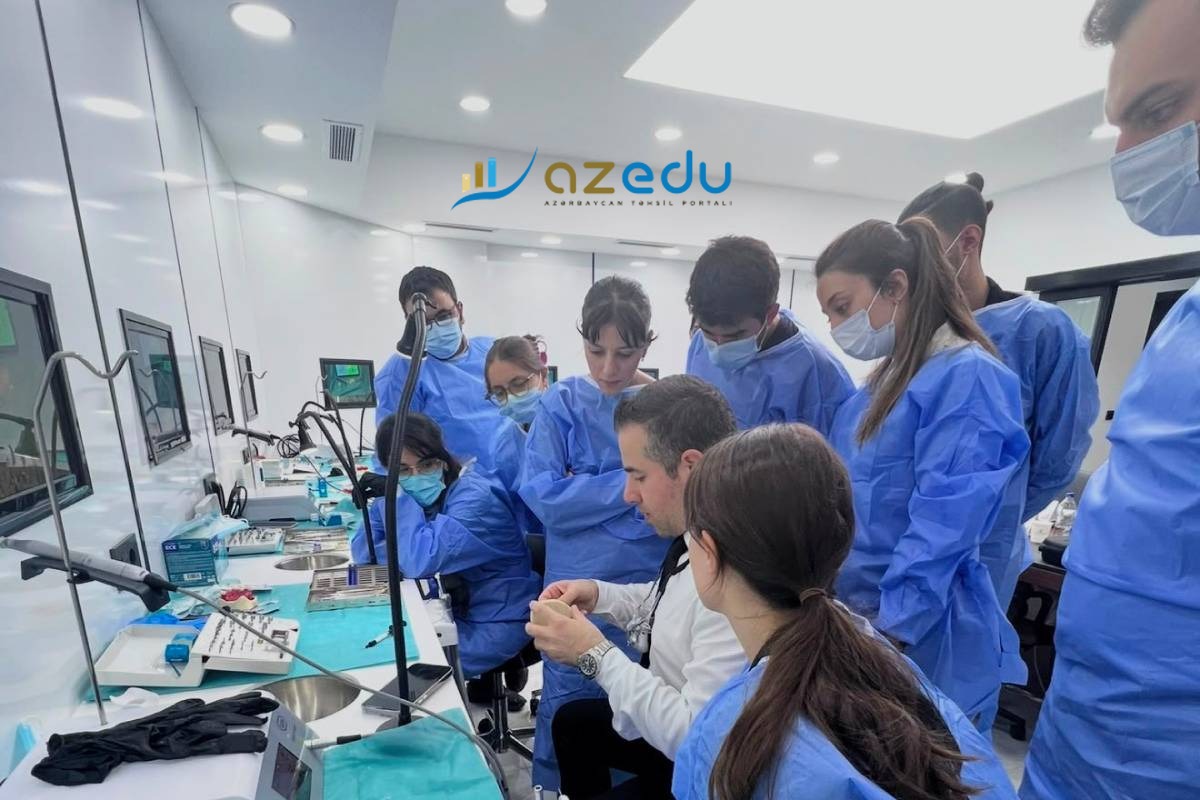
-Generally, the most valuable resource in the world is time. In my opinion, there is nothing else that can replace time. In the field of medicine, there are also operations that need to be performed in stages. Sometimes, it is necessary to wait three, and sometimes six months between these stages.
After a patient applies, the completion of treatment from the first operation to the final result can sometimes take a year, or even a year and a half. This is a sufficiently long period. However, many things can happen in a person's life within a year.
I thought there must be a way to organize this process more efficiently. I wanted to develop a method that combines the stages of surgery and allows for time saving. Thus, I worked on the "All-in-One Surgery" approach, meaning everything is done in one operation.
For example, in our specialty, in some cases, bone tissue is first restored, then implants are placed, and finally, prosthetic restoration is performed. These stages can take up to a year. However, with the methods I proposed, in appropriate clinical cases, it is possible to perform these procedures within a single surgical intervention. The patient undergoes surgery under general anesthesia, and after the intervention, both bone tissue is restored, implants are placed, and teeth are restored.
I have two different techniques in this direction. One of them has been known as the "Badaloglu technique" for more than ten years. In Turkey, my surname is used as Badaloglu. I receive positive feedback from the specialists I teach and explain these techniques to. I think these methods have found their place in the healthcare field.
-Digital technologies, artificial intelligence, and new diagnostic methods are rapidly developing in dentistry. In your opinion, how will these innovations affect oral and maxillofacial surgery in the coming years?
-It would no longer be correct to say that artificial intelligence and digital dentistry will change us in the future. Because these technologies have already changed our work processes. We have been actively using them for the last 15 years.
I think that although artificial intelligence has certain risks, its benefits are greater. Doctors and scientists who do not use these technologies may face difficulties in their professional activities over time. The main issue is to use artificial intelligence for the right purpose and in appropriate conditions. We also benefit from these opportunities in our activities.
Digital technologies facilitate staged surgical interventions. Previously, during surgery, it was necessary to perform surgical intervention to see tissues, take measurements, and determine the shape of the bone. Then, operations were carried out in subsequent stages.
Now, with the help of digital technologies, we can pre-determine the shape of the bone and existing pathologies from tomography images. It is also possible to prepare bone substitute materials - graft materials - to be used during surgery in advance and place them in appropriate sizes in the necessary area. This approach allows for shortening the operation time and reducing the number of stages of surgical interventions.
-You currently supervise doctoral students. What criteria do you use when determining their research topics? What are your plans for the future activities of your Azerbaijani doctoral student?
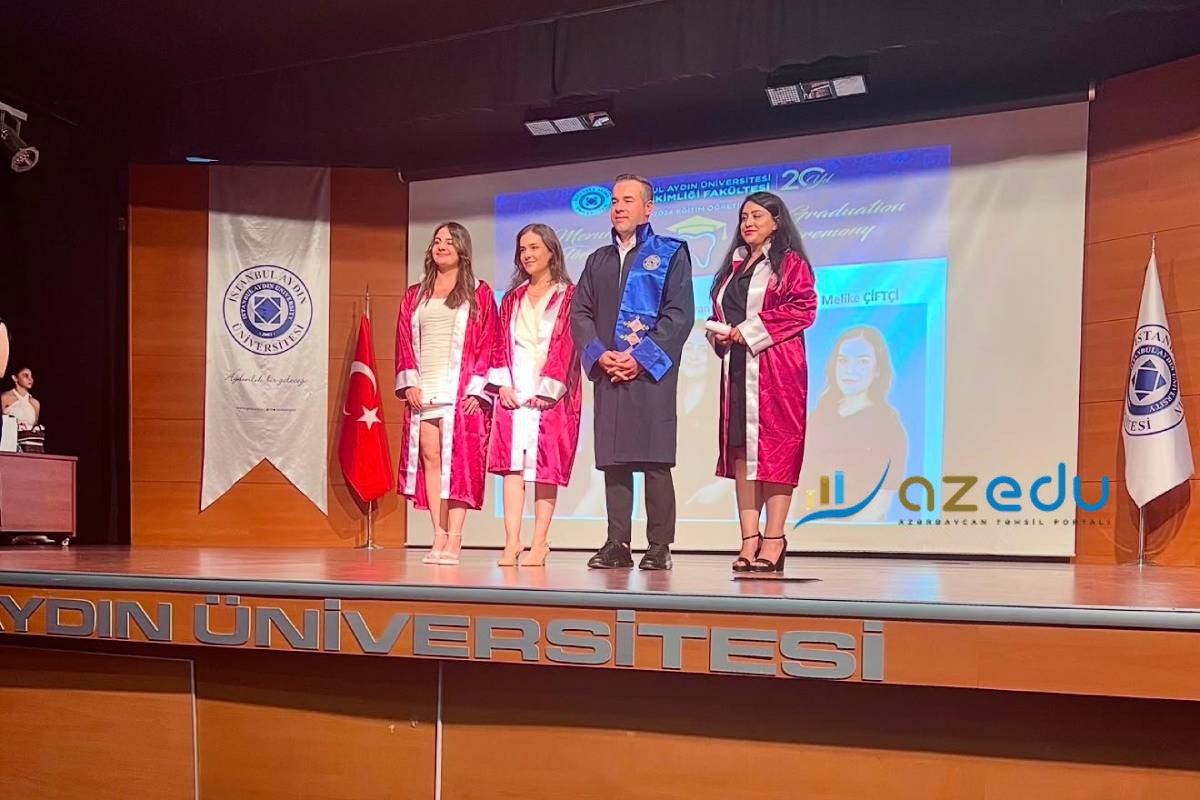
-To date, I have expanded my scientific supervision activities. I currently have seven doctoral students, and one of them is Azerbaijani. Of course, I did not choose him because he is Azerbaijani; he is among my doctoral students because he deserves this position. Nevertheless, I think that the responsibility on him is greater. During our first acquaintance, I told him that I want him to return to Azerbaijan after completing his education and work here as a full-fledged scientist. I believe that he will return to Azerbaijan. I also intend to do my best to make this happen.
However, I do not use a standard protocol in selecting scientific research topics for doctoral students. I try to take into account each student's abilities, worldview, approach, future plans, and area of interest. I believe that a person engaged in scientific research must have a genuine interest in the chosen topic.
If the topic I propose does not attract the student's interest, and they work in that direction only because I want them to, then if they turn to another field in the future, both their effort and my effort may be wasted. Therefore, I prefer to choose topics that match the students' individual abilities and interests.
At the same time, we pay special attention to ensuring that the chosen topics carry scientific novelty and yield results that can be published in international scientific literature. One of the main conditions for me is that the research contributes new knowledge to science. We determine the topics based on these principles.
-What advice would you give to young Azerbaijanis who want to study abroad and build a scientific career?
-My biggest advice to young people is, first of all, to correctly define their goals. The second important point is to perfectly learn the language of the country they are going to study or live in. I am not only referring to English. English is already an international communication language, and knowing this language has become a necessity in modern times. In addition, if they have the opportunity, they should learn other languages.
Another important piece of advice is to learn to be patient. I work with students a lot and observe that one of the problems the new generation faces is the desire to achieve everything in a short time. Young people sometimes want to climb stairs three by three, five by five, and get results quickly. But we must not forget that success requires patience, perseverance, and consistent effort.
Steps towards the goal must be taken one by one. When trying to climb the stairs hastily, a person can trip, stumble, and fall. Therefore, my advice to young people is to work consistently and systematically, be patient, and not easily give up on the goals they set for themselves. Most importantly, they should focus on learning languages, developing themselves, and working continuously. I believe that the path to success passes precisely through these principles.
The World Union of Azerbaijani Scientists is a platform that brings together Azerbaijani scientists working in various countries around the world, contributing to the strengthening of scientific ties and the development of international cooperation. The Union can play an important role in promoting Azerbaijani science at an international level, connecting the scientific potential of scientists working abroad with our country, and expanding knowledge exchange.
It should be noted that a memorandum of understanding has been signed between the World Union of Azerbaijani Scientists and the AzEdu Education Platform.