Nobel Prizes are one of the main symbols of international recognition for the greatest achievements in science and culture. Every year, individuals who have made significant achievements in physics, chemistry, physiology or medicine, literature, and peace are awarded this prize. However, mathematics, which plays a crucial role in the development of almost all branches of science, is not included in this list.
AzEdu.az has investigated the history of the Nobel Prizes, why mathematics was excluded from this list, the popular legends surrounding it, and the most prestigious international awards for mathematicians.
Why did Alfred Nobel not include mathematics in the prize list?
Swedish chemist, engineer, and inventor Alfred Nobel was born in Stockholm in 1833. He is best known for inventing dynamite. Throughout his life, Nobel conducted research in chemistry and explosives, obtaining 355 patents and accumulating a large fortune.
In his will, signed on November 27, 1895, Nobel stipulated that a large portion of his fortune should be used to reward achievements that benefit humanity. For this purpose, he identified five areas: physics, chemistry, physiology or medicine, literature, and peace. The first Nobel Prizes were awarded in 1901.
However, the absence of mathematics in his will later led to numerous discussions. One of the most widespread claims is that this decision was due to personal relationships.
According to a popular legend, Alfred Nobel did not establish a prize in mathematics because of his strained relationship with the Swedish mathematician Gösta Mittag-Leffler. Another version of the claim suggests that a woman close to Nobel was in a relationship with the mathematician, and this affected Nobel.
However, this story has no historical basis. One of the most important points is that Alfred Nobel never married. While there are ideas about his strained relationship with Mittag-Leffler, there is no reliable evidence to confirm that this factor led to the exclusion of mathematics from the prize list.
So what is the real reason?
Researchers believe that a more realistic explanation is that Alfred Nobel determined the prize areas based on his own interests and the scientific and social views of his time. Nobel was an inventor working in the fields of chemistry and physics. At the same time, he showed interest in literature and attached special importance to peace initiatives.
In the late 19th century, the role of mathematics in the development of other sciences was not as widely understood by the general public as it is today. Mathematics was largely considered a theoretical science, and its practical results emerged through fields such as physics and chemistry. Nevertheless, there is no document confirming that Nobel excluded mathematics for this specific reason.
Thus, the exact reason why mathematics is not among the Nobel Prizes is still unknown today. Alfred Nobel specified five areas in his will but did not explain why he did not choose other scientific fields.
How was the Nobel Prize in Economic Sciences created?
Another question often arises in discussions about mathematics: If Alfred Nobel only specified five areas, how was the prize in economic sciences established?
In fact, the prize in economic sciences was also not foreseen in Alfred Nobel's will. In 1968, the Swedish Central Bank (Sveriges Riksbank) established the Prize in Economic Sciences in Memory of Alfred Nobel on the occasion of its 300th anniversary. The first prize was awarded in 1969.
This prize is officially called the Sveriges Riksbank Prize in Economic Sciences in Memory of Alfred Nobel. Although it is commonly known as the Nobel Memorial Prize in Economic Sciences, from a legal and historical perspective, it differs from the five original Nobel Prizes created based on Alfred Nobel's will.
This fact shows that it is possible to add new directions to the Nobel Prizes later. However, despite decades passing since the creation of the economics prize, mathematics has still not been included in this system.
What are the alternatives considered Nobel Prizes for mathematicians?
The fact that the Nobel Prize is not awarded in mathematics does not mean that scientists working in this field are not recognized internationally. On the contrary, there are several prestigious awards established for mathematicians that are comparable to the Nobel Prize in terms of scientific prestige and importance. Among them, the Fields Medal and the Abel Prize hold a special place.
The Fields Medal is considered one of the most prestigious international awards in mathematics. Established at the initiative of Canadian mathematician John Charles Fields, the award was first presented in Oslo, Norway, in 1936.
Awarded by the International Mathematical Union, the Fields Medal is presented every four years within the framework of the International Congress of Mathematicians. The main purpose of the award is to distinguish scientists who have made significant achievements in mathematics and have the potential to make great scientific contributions in the future.
One of the most interesting features of the Fields Medal is the age limit. The candidate must not have reached the age of 40 by January 1 of the year the award is presented. This rule allows the award to primarily recognize the scientific achievements and future potential of young mathematicians.
An interesting point is that the Fields Medal features an image of the ancient Greek mathematician Archimedes. On the reverse side of the medal, a Latin inscription expresses the presentation of awards for outstanding scientific works by mathematicians gathered from various parts of the world.
The Abel Prize is one of the most prestigious international awards that recognizes mathematicians' lifelong scientific activity and their significant contributions to the field.
The award was established by the Norwegian government in 2002, on the occasion of the 200th anniversary of the birth of the famous Norwegian mathematician Niels Henrik Abel. It was first presented in 2003 to the French mathematician Jean-Pierre Serre.
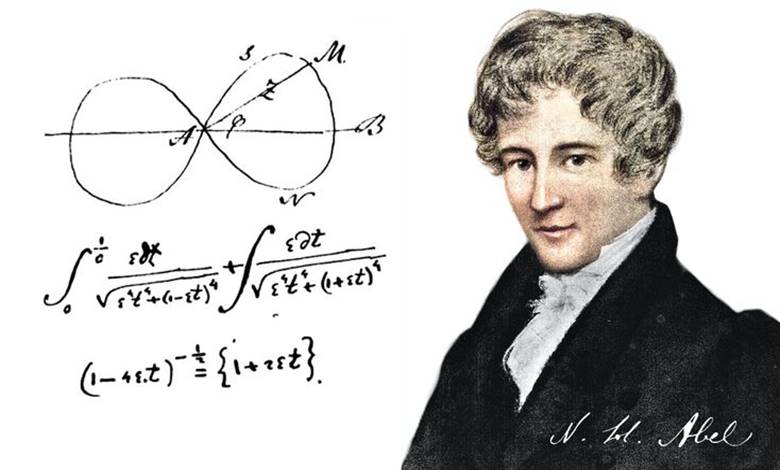
Presented annually by the Norwegian Academy of Science and Letters, the Abel Prize has no age limit. This feature is one of the main aspects that distinguishes it from the Fields Medal. The purpose of the award is to recognize not only individual discoveries but also contributions made to the development of mathematics over many years.
There is another interesting historical point related to the Abel Prize. In fact, the idea of its creation emerged long before 2002. The Norwegian mathematician Sophus Lie, already in the late 19th century, drew attention to the absence of mathematics among the Nobel Prizes and proposed the creation of an international award named after Abel. However, after his death in 1899, this initiative was not realized for a long time. Only on the 200th anniversary of Abel's birth was the idea brought up again, and as a result, the award was established.
The Shaw Prize is also an international award that recognizes great scientific achievements in mathematics. Established in 2002 at the initiative of Hong Kong entrepreneur and philanthropist Run Run Shaw, the award was first presented in 2004.
The Shaw Prize covers three areas: astronomy, life sciences and medicine, and mathematical sciences. The prize in mathematics is awarded to scientists who have made significant scientific advancements and important research in this field. Since 2016, the monetary amount of each prize has been set at 1.2 million US dollars.
Can mathematicians not receive Nobel Prizes?
The absence of a separate category for mathematics among the Nobel Prizes does not mean that mathematicians can never be Nobel laureates. Their scientific research can be awarded in other directions.
One of the most interesting examples of this is the American mathematician John Nash. He was awarded the Nobel Memorial Prize in Economic Sciences in 1994 for his fundamental research in game theory. His scientific work played a crucial role in the development of economics as well as mathematics.
This example once again shows how closely mathematics is connected with other sciences. In modern times, the development of fields such as artificial intelligence, data analysis, cryptography, economic modeling, and space research is also based on mathematical theories.
Thus, the absence of a mathematics category among the Nobel Prizes cannot be associated with the lesser importance of this science. Simply, Alfred Nobel did not specify this field as a separate direction in his will. The world of mathematics, however, has formed its own prestigious platforms through the later created Fields, Abel, and Shaw Prizes to promote its greatest scientific achievements internationally.