Wars have a serious impact not only on the political and military spheres but on all areas of society, including the education system. During armed conflicts, schools are closed, classes are suspended, and the safety of students becomes a top priority in many countries. In such cases, thousands of students and teachers are temporarily forced to stay away from the educational process. Wars occurring in various regions of the world have also caused similar interruptions in the education system.
The war in Syria, which began in March 2011 and is still ongoing, is an armed conflict between government forces and various armed groups. Anti-government protests in Syria began on March 15, 2011, and spread throughout the country in April. During the war, the educational process in the country was severely disrupted, and many schools ceased their activities.
On February 24, 2022, the ongoing war began with Russia's attack on Ukraine. During the course of the war, many schools and universities in Ukraine were closed.
On October 7, 2023, the conflict began with the attack by the Hamas group on Israel. In response, Israel launched a large-scale attack on the Hamas-controlled Gaza Strip on October 27 and took control of a large part of the territory, including the Philadelphi Corridor on the border with Egypt, by the end of May 2024. Due to the conflict, schools in Gaza had ceased their activities. In 2025, schools resumed their operations.
On February 28, 2026, Israel and the United States of America carried out a joint attack against various targets in Iran. As a result of the attack on the city of Minab in Iran on March 1, approximately 160 schoolchildren were killed. Additionally, the activities of schools and universities in Iran were suspended.
At the same time, in response to Iran's missile attacks, Israel declared a state of emergency nationwide, and consequently, schools and many workplaces were closed.
AzEdu.az sought the opinions of MP Ceyhun Məmmədov to study the effects of wars on education.
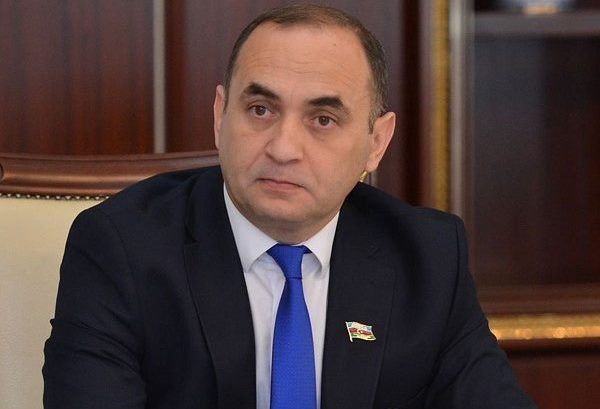
The impact of wars on children's psychology is very strong:
“Generally, when a war occurs in any country, various parties and structures suffer. Buildings are destroyed, schools are damaged, and other unpleasant situations arise. From this perspective, a careful look at the process reveals that educational institutions also suffer serious damage during wars.
This is an extremely serious issue and problem. Wars are not happening for the first time in the world, and we have witnessed such events throughout history. In general, the impact of wars on children's psychology is very strong. For example, videos circulated during the attack on Nakhchivan also showed that children experienced great anxiety and fear. We have experienced such situations before. During the occupation of Karabakh and our other territories, numerous homes and schools were destroyed. Hundreds of schools and educational infrastructure in the Karabakh region suffered serious damage.”
Such situations also seriously affect children's normal educational environment:
“Today, a similar situation can be observed in Syria. Azerbaijan even supports the establishment and restoration of school infrastructure in Syria, allocating funds in this direction. All this indicates that during wartime, the education sector is always one of the affected areas.
Such situations also seriously affect children's normal educational environment. Both psychologically and as a result of interruptions in the educational process, children can become somewhat distanced from knowledge and science. This, in turn, negatively affects their continuous education process.”
Education Expert Elçin Əfəndi noted that, in such situations, the safety and health of students become the main issue:
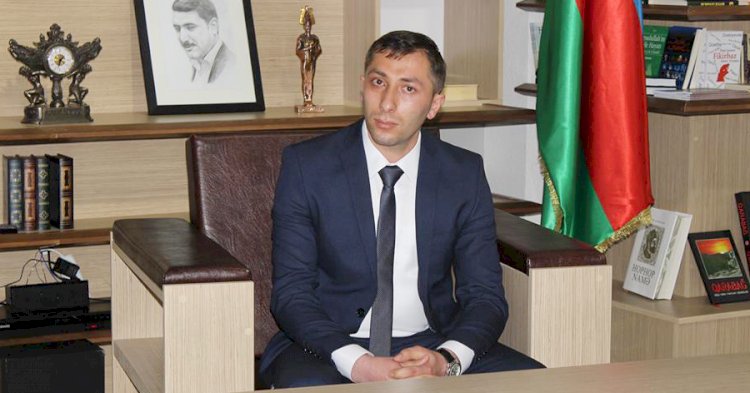
“In any case, conflicts between countries should not escalate to war. Because when war breaks out, the education sector, like many other sectors, suffers serious damage. In such situations, the safety and health of students become the main issue, and the educational process is either postponed or experiences serious interruptions.
We have witnessed long-term interruptions in education during wars, both in the current period and in previous years. For example, during the period when Azerbaijan was subjected to Armenian aggression, we saw how educational institutions in the territories occupied for 30 years were turned into ruins. We also saw that citizens living in those areas faced great difficulties in continuing their education in various regions of the republic.
During wartime, serious problems arise both in terms of infrastructure and the health and safety of people. Sometimes, educational institutions are damaged and casualties occur as a result of military equipment or weapons falling. This means a great loss, and the recovery process after such losses requires a very long time.”
Such incidents cause serious damage to the education sector, both financially and in terms of infrastructure:
“Currently, we are witnessing this in the events occurring in neighboring regions. In the context of the conflict between the USA, Israel, and Iran, some neighboring countries are also experiencing difficulties. For example, in some Gulf countries, the educational process is temporarily suspended for security reasons. That is, a conflict occurring in any region affects not only that country but also the lives of people living in surrounding areas, including their education.
Unfortunately, such incidents sometimes lead to very dangerous consequences. For example, today information was spread about a UAV falling near a school in Shakarabad village of Babek district, Nakhchivan Autonomous Republic of Azerbaijan, by Iran. As a result, classes in that school were suspended, and students were evacuated.
Such incidents cause serious damage to the education sector, both financially and in terms of infrastructure. Therefore, it would be better for the parties to resolve issues through diplomatic means first. Even if diplomatic means do not yield results and the conflict escalates to an armed confrontation, civilians should not be targeted. Especially schools and schoolchildren should not be targets of such dangers. Educational institutions should be protected as neutral spaces in such cases, and the education and safety of students should not be put at risk.”